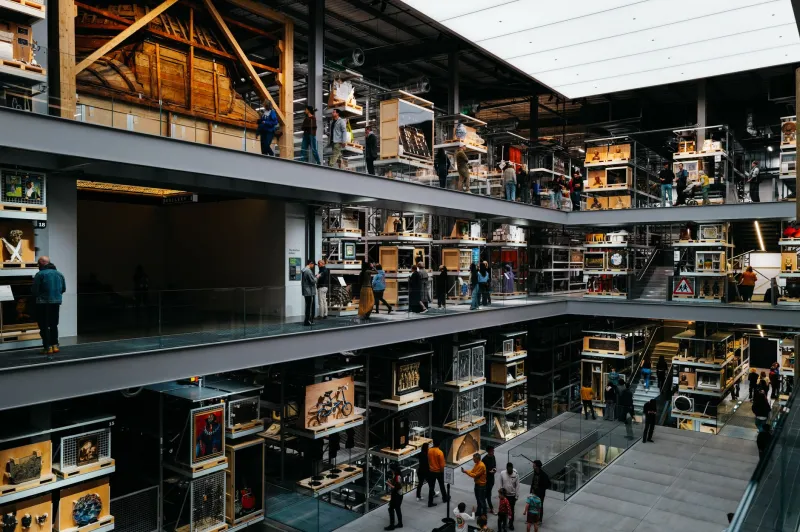
The Algorithm and the Eye: Social Media's Complicated Relationship With Contemporary Art Discovery
There is a photograph circulating on Instagram—you have likely encountered it—of a room painted floor to ceiling in a single saturated hue, a neon sign positioned at the precise angle that catches the light most flatteringly, and a visitor posed in the foreground, face obscured, looking contemplative. The image has been liked hundreds of thousands of times. Whether the underlying work merits that attention is a question the algorithm does not ask.
This is the central paradox of social media's relationship with contemporary art: the same platforms that have dismantled decades of institutional gatekeeping and handed genuine visibility to artists who might otherwise have languished in obscurity have also introduced a new and arguably more capricious form of curation—one governed not by critical judgment but by engagement metrics, posting frequency, and the inscrutable logic of recommendation engines.
The Case for Democratization
The argument in favor of social media as an art discovery tool is not trivial. For much of the twentieth century, access to the contemporary art market was mediated by a relatively small network of dealers, critics, curators, and collectors concentrated in a handful of cities—New York, Los Angeles, Chicago, and a few European capitals. An artist without connections to this network, regardless of talent, faced extraordinary structural barriers to visibility.
Instagram, launched in 2010, began eroding those barriers almost immediately. Artists who could document their practice compellingly—who understood light, composition, and the particular grammar of the square-format image—discovered that they could build audiences of genuine scale without a gallery affiliation, a critical champion, or a degree from an elite MFA program. The painter Cynthia Talmadge, the ceramicist Adam Silverman, and the illustrator Jean Jullien are among the artists who cultivated substantial online followings before traditional institutional recognition arrived, in some cases accelerating that recognition considerably.
For younger collectors—the millennials and Gen Z buyers who are beginning to enter the market in meaningful numbers—this shift has been transformative. A 2023 survey conducted by the Art Basel and UBS Global Art Market Report found that high-net-worth collectors under forty were significantly more likely to discover new artists through social media than through gallery visits or art fairs. That is not a marginal finding; it represents a structural reorientation of the discovery pipeline.
"We have had collectors walk in and tell us they found the artist on TikTok the night before," says one director at a mid-size contemporary gallery in Manhattan, who asked not to be identified by name. "Five years ago, that would have been unthinkable. Now it happens weekly. The question we're always asking is: does the work hold up in person? Usually it does. Sometimes it doesn't."
The Case Against Algorithmic Curation
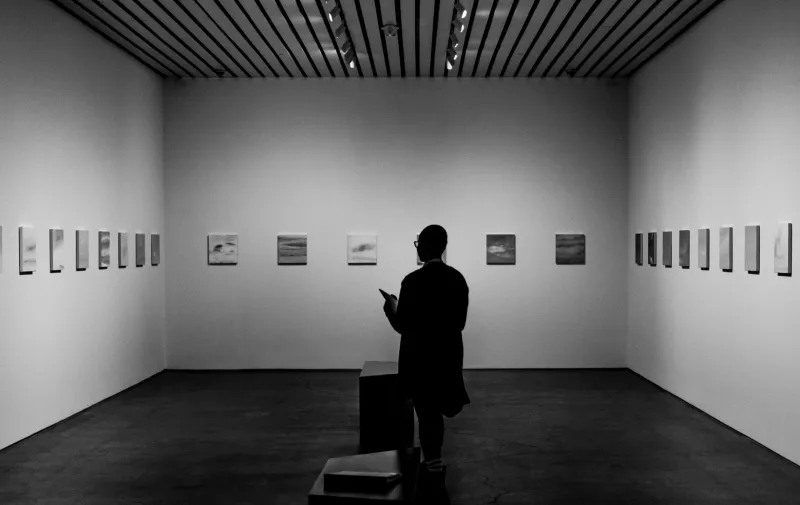
That final caveat deserves elaboration. The visual grammar that performs well on social media—bold color, graphic simplicity, immediate legibility, a certain kind of photogenic scale—is not identical to the qualities that make work endure. Some of the most significant art of the past century has been deliberately difficult, formally austere, or conceptually demanding in ways that resist the two-second attention economy of the feed.
The risk is not merely that mediocre work achieves unwarranted visibility. It is that the sustained attention required to engage seriously with complex work is being trained out of audiences by platforms designed to maximize time spent scrolling rather than time spent looking. A painting that rewards twenty minutes of close observation is at a structural disadvantage in an environment that rewards the image that generates a like in two seconds.
There is also the question of what the virality cycle does to artists themselves. Several practitioners have spoken candidly—though rarely on the record—about the psychological pressure of maintaining posting schedules, the temptation to produce work calibrated to platform performance rather than artistic necessity, and the disorienting experience of watching a single image accumulate engagement while deeper, more considered work passes unnoticed. The platform's incentive structure is not neutral; it shapes behavior, and in some cases, it shapes the work itself.
How Galleries Are Adapting
The institutions that have navigated this landscape most effectively tend to be those that have embraced social media as a discovery tool while maintaining rigorous standards for what they present and how they contextualize it. Several forward-thinking galleries have hired dedicated digital content directors—not social media managers in the conventional marketing sense, but individuals with genuine art historical training who understand how to translate curatorial thinking into platform-native formats.
David Zwirner's online viewing rooms, launched in 2017 and significantly expanded during the pandemic, represent one model: a serious attempt to use digital infrastructure to extend institutional reach without compromising the depth of engagement the gallery's program demands. Pace Gallery has similarly invested in digital programming that treats online audiences as serious interlocutors rather than passive consumers.
Smaller galleries face a more acute version of the same challenge. Without the resources to maintain sophisticated digital operations, many have found themselves in an uncomfortable position: visible enough on social media to attract interest but unable to compete with the content volume that the algorithm rewards. Some have responded by focusing their digital presence on depth rather than frequency—fewer posts, more substantial contextual information, longer-form video content that approximates the experience of a studio visit or a curator's walk-through.
The Generational Divide and Its Implications
The collectors who discovered art through gallery walks in the 1980s and 1990s and the collectors who discovered it through Instagram in the 2010s are not, it should be said, looking for entirely different things. The desire for work that is visually compelling, conceptually serious, and emotionally resonant is relatively constant across generations. What differs is the pathway to discovery and, relatedly, the expectations that pathway creates.
Younger collectors tend to arrive at galleries with more information about an artist's practice and biography than their predecessors did—they have read the Instagram captions, watched the studio process videos, followed the discourse in comments sections. This can make conversations more productive. It can also create a kind of parasocial familiarity that substitutes for genuine critical engagement.
For Greene Contemporary, the question is ultimately one of calibration. Social media is neither the salvation nor the ruination of contemporary art culture. It is a tool—powerful, double-edged, and still evolving. The institutions and collectors who will navigate it most successfully are those who use it to initiate relationships with art and artists, rather than to conclude them.