The Archive as Manifesto: Why Today's Artists Are Making Documentation Their Most Radical Work
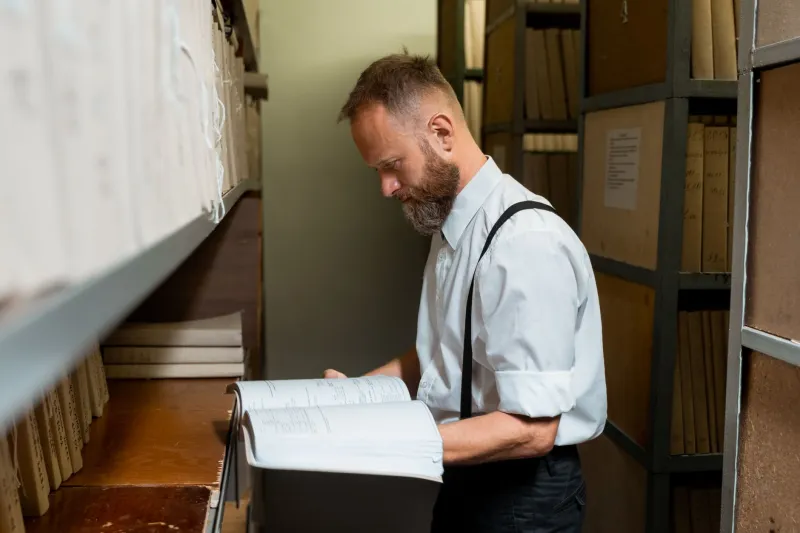
There is a particular kind of discipline required to photograph every iteration of a painting before it is altered, to catalog each discarded sketch, to log the precise hour a decision was made and then reversed. For most of art history, such practices were the province of estate managers and archivists who arrived after the fact — after the deaths, the retrospectives, the auction records. What is distinctly new, and quietly radical, is that artists are now doing this work themselves, in real time, with full awareness of what they are building.
The studio archive, once a chaotic byproduct of creative labor, has been elevated by a generation of American artists into something far more deliberate: a living counter-record, a political instrument, and in some cases, a primary artistic statement that rivals the finished object in conceptual weight.
From Byproduct to Blueprint
The impulse is not without precedent. Andy Warhol's obsessive accumulation of ephemera — preserved in the more than six hundred cardboard boxes that became the foundation of the Andy Warhol Museum's archive in Pittsburgh — pointed toward a sensibility that collapsed the boundary between life, process, and artifact. But Warhol's archiving was, by most accounts, instinctive and accumulative rather than strategically political.
What distinguishes the current moment is intentionality. Artists working today are constructing archives with specific audiences and specific threats in mind. Those threats include the homogenizing pressures of the commercial gallery system, the algorithmic flattening of visual culture on social platforms, and the persistent tendency of mainstream institutions to misrepresent or simply overlook work produced outside the dominant cultural narrative — particularly work by artists of color, queer artists, and those operating outside major metropolitan art markets.
For these practitioners, documentation is not nostalgia. It is armor.
Preserving What the Market Cannot Price
Consider the challenge facing any artist whose work engages with community, performance, or time-based media. A painting can be sold, stored, and insured. A years-long engagement with a specific neighborhood, the conversations that shaped a mural's iconography, the relationship between an artist and a local congregation that commissioned a stained-glass installation — none of this survives in the object alone. When the object is sold, much of the meaning travels with the context that produced it, and that context evaporates unless someone has taken deliberate steps to preserve it.
Several artists working in this vein have spoken openly about their frustration with what one might call the market's selective memory. Collectors and institutions acquire the resolved work while the generative material — the false starts, the community dialogues, the research notebooks — remains invisible and vulnerable. By building exhaustive records that include video documentation, correspondence, and annotated process journals, these artists are asserting that the totality of their practice constitutes the work, and that no single transaction can contain it.
This position carries an implicit critique of how value is assigned in the contemporary art world. If the archive is as significant as the artwork, then the artwork's price tag tells only a fraction of the story.
Documentation as Political Act
The stakes become considerably higher when cultural erasure is not merely a market phenomenon but a historical one. Artists whose communities have been systematically excluded from institutional collection and exhibition histories face a compounding problem: not only is their current work underrepresented, but the record of their predecessors' work is incomplete or actively distorted.
For artists working within Black American, Indigenous, and various diasporic traditions, the act of building a studio archive carries the weight of corrective history. It is a refusal to allow the next generation of curators and scholars to inherit the same gaps. Several such artists have described their archiving practices in explicitly intergenerational terms — they are creating resources not for their own retrospectives, but for the researchers who will, they hope, reconstruct a fuller picture of American art history decades from now.
This framing redefines what an archive is for. It is not a monument to individual achievement. It is infrastructure for collective memory.
The Digital Dimension
The digital age has complicated this project in equal measure as it has enabled it. On one hand, artists now have access to tools — high-resolution photography, cloud storage, metadata tagging, digital video — that make comprehensive documentation more achievable than at any prior moment in history. A studio practice that might once have required a dedicated archivist and significant institutional support can now be maintained, at least in its fundamentals, by a single artist with a smartphone and a structured approach.
On the other hand, digital documentation introduces its own vulnerabilities. Platforms change their terms of service. File formats become obsolete. Hard drives fail. The social media posts that constitute a form of real-time documentation for many working artists today exist on infrastructure owned by corporations with no particular investment in cultural preservation. Several artists have begun working with independent archivists and university special collections precisely because they do not trust the digital commons to hold their records intact.
There is also a subtler problem. The visibility that digital documentation enables can itself become a distortion. When process images circulate widely on Instagram or are featured in online publications, they are inevitably decontextualized, cropped, and reinterpreted by audiences who encounter them without the accompanying text, timeline, or artist statement. The archive, in these moments, is not preserved but fragmented.
Authenticity and the Unfinished Object
Perhaps the most philosophically interesting dimension of this shift is what it does to the concept of the finished work. If an artist's archive includes every stage of a painting's development — from initial charcoal gesture to final varnished surface — then the question of which version constitutes the "real" artwork becomes genuinely unstable. Some artists have embraced this instability as a feature rather than a problem, arguing that the archive reveals the artwork to be a process rather than an object, a duration rather than a moment.
This has implications for collectors and institutions that are accustomed to acquiring discrete, bounded objects. It suggests that what they own is, at best, one frame in a longer film — and that the film itself belongs to the artist, to the archive, and ultimately to history.
What Endures
The artists who have most fully committed to this practice share a conviction that resonates well beyond any individual career: that what an artist leaves behind should not be determined solely by what the market chose to purchase. The archive is a corrective to that selection process, a way of insisting that creative labor has value that exceeds its commodity form.
For those of us who follow contemporary art closely, this represents one of the more significant conceptual developments of the past decade — not because it produces a new visual style or movement, but because it reframes the fundamental question of what art is and who gets to decide. In treating documentation as manifesto, these artists are not merely preserving their own legacies. They are proposing a different relationship between making, meaning, and memory.
That proposal deserves the same serious attention we give to the objects on the gallery wall.