Beyond the Mega-Gallery: How Serious Collectors Are Rewriting the Rules of Acquisition
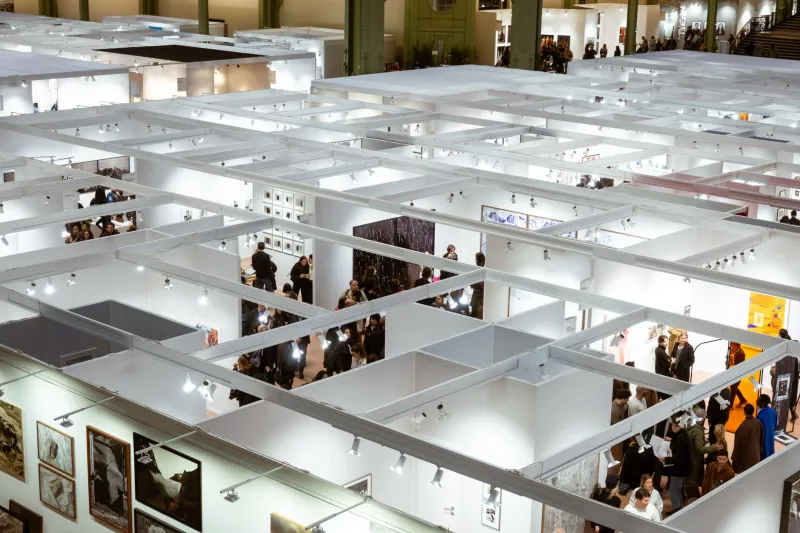
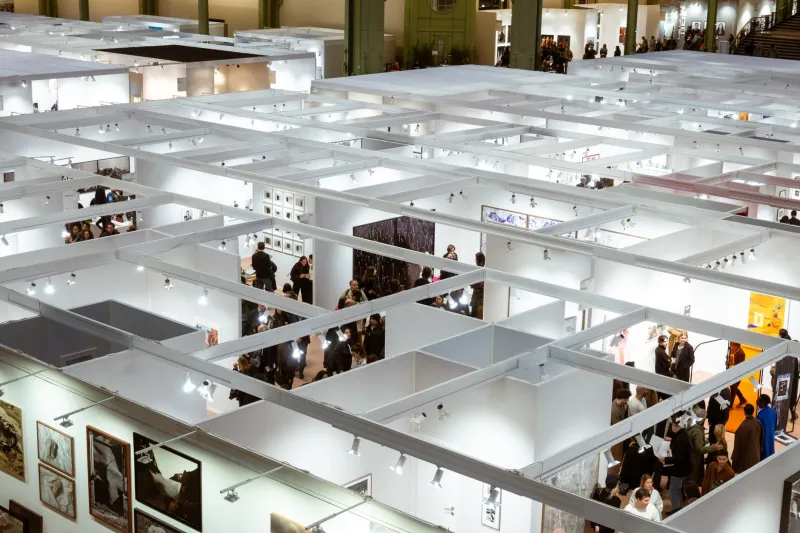
For decades, the architecture of serious art collecting in America followed a recognizable blueprint. You cultivated relationships with the major galleries — the Gagosians, the Hauser & Wirths, the Pace Galleries of the world — attended the right Art Basel vernissages, and secured your acquisitions through channels that were as much about social positioning as aesthetic judgment. That blueprint, while still operative, is showing meaningful cracks. Among a growing cohort of ultra-high-net-worth collectors, the independent and mid-tier gallery has become not a consolation prize but a deliberate destination.
The implications of this shift extend far beyond individual transactions. They speak to a fundamental renegotiation of how cultural capital is accrued, how artistic careers are shaped, and who ultimately holds the power to define what contemporary art matters.
The Fatigue of the Familiar
Speak privately with collectors who have been active in the market for fifteen years or more, and a recurring theme emerges: a creeping sense of predictability at the upper echelons of the gallery world. When the same dozen artists appear across booths at every major fair — from Miami Beach to Basel to Frieze New York — the thrill of discovery gives way to something closer to brand management.
"There's a difference between buying art and buying art-market art," one New York-based collector, who declined to be named, explained during a recent conversation at a Lower East Side opening. "At a certain point, the mega-galleries are selling you a financial instrument wrapped in a canvas. That's not why I started collecting."
This sentiment, once whispered at the margins, has grown audible enough to register as a structural trend. Advisors who work with family offices and individual collectors of significant means report that a growing proportion of their clients are explicitly requesting introductions to galleries operating below the threshold of international art-fair dominance — spaces with fewer than a dozen represented artists, often located outside the predictable geography of Chelsea or the Upper East Side.
Case Studies in Strategic Diversification
The evidence is not merely anecdotal. Consider the recent acquisition history of several prominent American collections. A Texas-based collector known for holdings in blue-chip postwar work made headlines — quietly, within the trade — when it emerged that three of her last five major purchases came through galleries that had never participated in Art Basel Miami Beach. Two of those works were acquired directly from artists whose representation had only recently been formalized.
In Los Angeles, a technology entrepreneur with a collection valued in the nine-figure range has spent the past two years cultivating relationships with galleries in Boyle Heights and Inglewood, neighborhoods that sit well outside the traditional axis of the city's art market. His most recent acquisition — a large-scale textile work by an artist whose first solo show opened fewer than eighteen months ago — was made before the work was ever offered to the gallery's broader network.
These are not isolated curiosities. They represent a recognizable pattern: collectors of serious means deliberately inserting themselves earlier into an artist's trajectory, at a stage when the mega-gallery infrastructure has not yet arrived to formalize — and, critics would argue, to flatten — the work's meaning.
What Independent Galleries Offer That Institutions Cannot
The appeal of the independent gallery, for collectors navigating this reorientation, is multifaceted. Access is one dimension: at a gallery representing eight artists rather than eighty, the relationship between collector and gallerist tends toward genuine dialogue rather than transactional efficiency. Collectors describe spending hours with directors at smaller spaces, discussing not just individual works but an artist's entire conceptual arc.
There is also the question of financial entry points. Works by artists at the beginning of their institutional recognition — shown at galleries that are themselves building their reputations — carry price tags that, even for collectors of substantial means, feel proportionate to the speculative nature of the acquisition. The asymmetry of potential appreciation is not lost on buyers who have watched early-career artists, championed by independent spaces, subsequently absorbed into the mega-gallery orbit at multiples of their original valuations.
But perhaps most significantly, there is the matter of meaning. Several collectors interviewed for this piece returned, unprompted, to the idea that purchasing work through an independent gallery feels like participation rather than consumption. "When I buy from a small gallery, I'm part of the story," said one Chicago-based collector who has built a nationally recognized collection over two decades. "I'm helping to write it. That's not something you experience when you're number forty on a waiting list."
The Ripple Effects on the Market
This behavioral shift among major collectors carries consequences that will reverberate through the art ecosystem for years. Independent galleries that attract the attention of serious buyers gain not just revenue but legitimacy — the kind that accelerates an artist's trajectory and elevates the gallery's own standing within the institutional hierarchy. The cycle, once initiated, can move quickly.
For the mega-galleries, the challenge is more philosophical than existential. Their commercial dominance remains intact; their artist rosters, their auction relationships, and their fair presences are not under meaningful threat. What is shifting is the locus of cultural authority — the sense that the most interesting conversations about contemporary art are happening elsewhere, in spaces that have not yet been fully incorporated into the market's dominant grammar.
Some within the established gallery world have responded by launching satellite programs, incubator initiatives, and curatorial partnerships with smaller spaces — attempts to capture the energy of independent discovery while retaining the infrastructure of scale. Whether these hybrid models succeed in replicating the intimacy that collectors are seeking, or whether they merely extend the mega-gallery's reach under a different banner, remains an open question.
A Recalibration, Not a Revolution
It would be a mistake to overstate the rupture. The major galleries retain formidable advantages: global networks, art-historical relationships, secondary-market leverage, and the institutional imprimatur that still matters enormously to certain collectors and museum acquisition committees. The shift toward independent and mid-tier spaces is a recalibration, not a wholesale rejection.
Yet recalibrations, in markets as sentiment-driven as the contemporary art world, have a way of gathering momentum. When the collectors who set the tone — whose acquisitions are tracked, discussed, and emulated by the broader collector community — begin to signal that the most vital work is being found outside the established circuit, the circuit itself must respond or risk a slow diminishment of its cultural authority.
For the independent galleries navigating this moment, the opportunity is real, if precarious. Attracting the attention of major collectors accelerates everything: prices, expectations, the pressures on represented artists to produce at a pace and scale that may not serve the work. The challenge is to absorb the new interest without surrendering the conditions that made the work interesting in the first place.
That tension — between discovery and institutionalization, between the intimate and the global — is not new to the art world. But it has rarely felt as live, or as consequential, as it does at this particular moment in the market's evolution.