Wealth, Power, and the Palette: How Market Consolidation Is Quietly Redrawing Contemporary Art's Boundaries
There is a particular irony embedded in the contemporary art world's most celebrated moments. When a canvas sells for tens of millions of dollars at a marquee auction house, the headlines celebrate culture. What they rarely examine is the gravitational force that sale exerts on everything beneath it—the emerging painter working out of a shared studio in Detroit, the mid-career sculptor whose gallery just lost its lease, the regional institution that can no longer compete for loans of significant works. The art market, in its current configuration, does not merely reflect artistic value. Increasingly, it manufactures it.
The consolidation accelerating through the gallery sector over the past decade has been well-documented in trade publications, but its cultural consequences deserve a more sustained reckoning. Mega-galleries—those operating across multiple international cities with artist rosters that read like blue-chip investment portfolios—now exercise a degree of market influence that would have seemed implausible to the New York art world of the 1980s. When a single gallery represents a significant proportion of the artists commanding seven-figure prices, the downstream effects on what gets exhibited, reviewed, collected, and ultimately preserved are profound.
The Architecture of Exclusion
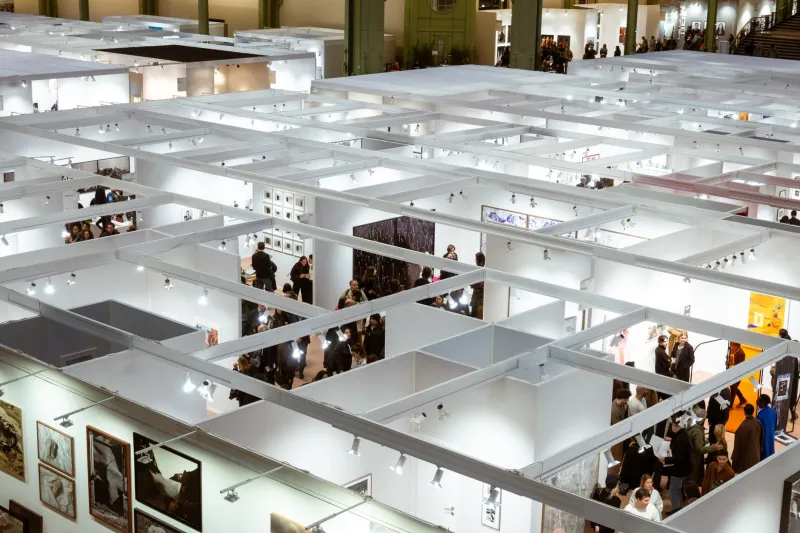
To understand the present landscape, one must first appreciate how thoroughly it has been restructured. The consolidation is not merely numerical—fewer galleries controlling more artists—but architectural. The physical and financial infrastructure of the contemporary art world now tilts decisively toward the established. Art Basel, once a fair where serious collectors encountered genuinely surprising work, has expanded its franchise into Miami Beach, Hong Kong, and Paris, each iteration reinforcing a shared aesthetic vocabulary of market-validated contemporaneity. The booths that command prime placement are not occupied by risk-takers; they are occupied by institutions whose financial stability is itself a form of curatorial argument.
Gallerists operating at the mid-tier level describe a market that has bifurcated with unusual speed. "There used to be a recognizable ladder," observes one New York dealer who has run a respected program in Chelsea for nearly two decades. "You built an artist's reputation over years, moved them from group shows to solos, watched collectors grow with them. That ladder still exists, but the rungs in the middle have been pulled out. You either have access to the infrastructure of the very large galleries, or you're operating in a completely different economy."
That different economy is not without its vitality—community-oriented spaces, artist-run initiatives, and nonprofit exhibition programs continue to produce genuinely adventurous work. But the pipeline from those spaces to sustained market visibility has narrowed considerably. When the dominant fairs increasingly screen exhibitors based on financial stability rather than programmatic ambition, smaller galleries face a structural disadvantage that compounds over time.
What the Money Asks of the Art
The financialization of contemporary art carries subtler consequences than exclusion alone. It shapes the art itself. Artists who understand the market—and in 2025, most serious practitioners do—navigate an implicit set of expectations about what kinds of work will attract institutional support, gallery representation, and collector interest. This does not produce cynicism so much as a calibrated self-editing, a narrowing of ambition that occurs well before any gallerist or advisor enters the conversation.
A mid-career painter based in Los Angeles, whose work has been exhibited at respected institutions on both coasts, describes the dynamic with characteristic precision. "Nobody tells you what to make. That's not how it works. But you understand very quickly that certain scales, certain materials, certain conceptual frameworks photograph well, travel well, and hold value well. The market doesn't dictate to artists directly. It just rewards some choices more consistently than others, and over time, those rewards shape the conversation about what contemporary art is supposed to look like."
The consequences are visible in the dominant aesthetics of major fairs and blue-chip gallery programs: works that are visually arresting at a distance, legible in reproduction, and sufficiently abstract in their references to resist cultural or political specificity that might limit their appeal across markets. There are, of course, significant exceptions—artists whose work is genuinely challenging and yet commands substantial prices. But they tend to be exceptions that the market has accommodated rather than exceptions that have remade the market's logic.
The Collector's Responsibility
It would be reductive to locate the problem solely in the institutional architecture of galleries and fairs. Collectors—particularly the new generation of high-net-worth individuals who entered the market in the past fifteen years—bear a portion of the responsibility for the landscape they inhabit. The treatment of art as an alternative asset class, with all the attendant emphasis on liquidity, provenance, and price history, has accelerated a dynamic in which the work's cultural function becomes secondary to its financial profile.
This is not to suggest that collecting and speculation are incompatible with genuine engagement. Many serious collectors maintain that financial consideration and aesthetic passion coexist productively in their acquisitions. But the aggregate effect of a market in which art advisors speak the language of portfolio diversification, and in which storage facilities in Geneva and Delaware hold significant works that will not be seen publicly for years, is a cultural impoverishment that no individual collector intends but that the system collectively produces.
Some collectors are responding with deliberate counter-programming. A number of prominent American collectors have redirected portions of their acquisition budgets toward works by artists at earlier career stages, toward media that are less commercially legible, and toward institutions—university galleries, community museums, artist residencies—that operate outside the primary market entirely. These gestures are meaningful, if insufficient to alter the larger dynamics on their own.
Navigating the Stratified Present
For artists, gallerists, and institutions committed to work that does not fit neatly into the market's preferred categories, the current moment demands both clarity and creativity. Several models have emerged as partial responses to consolidation's pressures. Artist collectives that bypass traditional gallery representation, sharing resources and building audiences directly, have demonstrated genuine resilience. Regional institutions that cultivate deep relationships with local collectors, rather than competing for national attention, have found sustainable programmatic identities. And a growing number of mid-tier galleries have embraced the nonprofit or hybrid model, decoupling their exhibition programs from the commercial imperatives that increasingly distort the primary market.
None of these adaptations resolves the fundamental tension between artistic integrity and market viability that consolidation has sharpened. What they suggest, however, is that the art world's response to its own stratification need not be passive. The choices made now—by collectors deciding where to place their resources, by institutions deciding whose work to present, by artists deciding what to make and under what conditions—will determine whether the bifurcation of the current moment becomes permanent or whether the middle ground, where the most consequential art has so often originated, finds new forms of support and visibility.
The market will continue to set its records. The question that matters more, for those who believe that contemporary art's value exceeds its price, is what survives alongside those records—and who ensures that it does.