Beyond the White Cube: How Serious Collectors Are Seeking Art in Its Most Unguarded Spaces
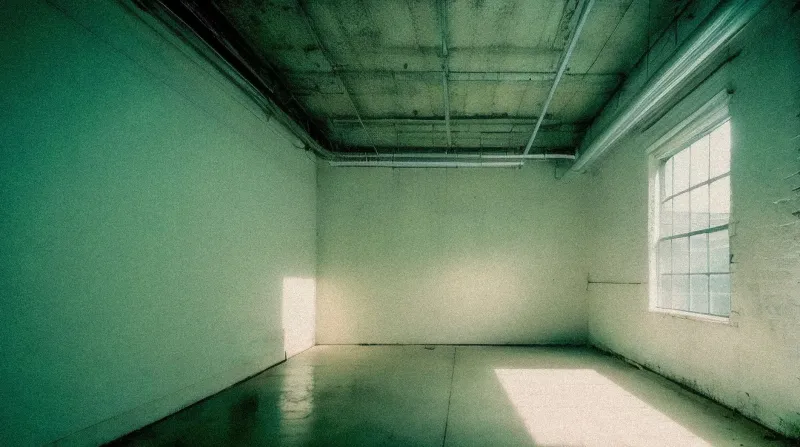
For decades, the white cube was gospel. Its neutral walls, engineered lighting, and carefully calibrated silence were understood to be the proper conditions under which art revealed itself — and under which collectors made their most significant decisions. To buy within that context was to participate in a system that conferred not merely ownership but credibility. The gallery was not simply a venue; it was a validation mechanism.
That consensus is fracturing.
Across the United States, a growing and notably sophisticated cohort of collectors is bypassing the traditional gallery circuit with quiet deliberation. They are showing up, instead, at open studio events in South Los Angeles warehouses, at artist-run residencies along the Hudson Valley, at informal salon-style gatherings hosted in private lofts in Chicago's Pilsen neighborhood. They are arriving not as passive purchasers but as participants — and they are finding that the experience of acquiring work in proximity to its creation carries a charge that the white cube, for all its refinements, has never quite managed to replicate.
The Authenticity Premium
To understand this shift, one must first reckon with what collectors are actually seeking when they pursue art in unconventional spaces. The answer, almost universally, is a form of unmediated encounter — a relationship with the work, and with the artist, that has not been processed through the interpretive machinery of institutional presentation.
In a gallery, the work arrives already contextualized. The press release has framed the narrative. The price sheet has assigned a market position. The gallerist, however skilled, inevitably mediates the conversation. What collectors are describing when they speak about studio visits and underground exhibitions is something categorically different: the opportunity to understand a practice rather than simply acquire an object.
"There is a kind of knowledge you accumulate standing in the space where something was made," observed one New York-based collector who has spent the past three years redirecting the majority of her acquisitions budget toward direct studio purchases. "You see the false starts. You understand the scale of the ambition relative to the scale of the room. That context doesn't travel to the gallery — or at least, not intact."
This hunger for context is not merely sentimental. It has practical implications for how collections are built and, increasingly, how they are regarded by curators and institutions evaluating their long-term significance.
Institutional Skepticism and Its Consequences
The rise of the studio-and-underground circuit cannot be separated from a broader erosion of institutional trust that has reshaped American cultural life in recent years. Major galleries have faced sustained criticism — some of it well-documented, much of it circulating more quietly — regarding the opacity of their pricing structures, the narrowness of the artists they champion, and the degree to which market dynamics have come to override aesthetic judgment in their programming decisions.
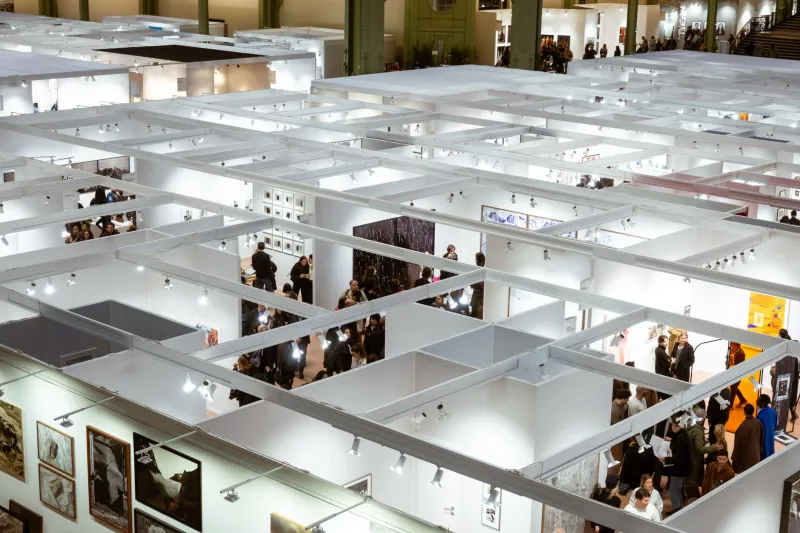
For collectors who came of age during the boom cycles of the 2000s and early 2010s, there is a particular wariness about what might be called the spectacle of legitimacy: the art fair booth, the auction house estimate, the breathless institutional endorsement that arrives, suspiciously, just as a work reaches peak market value. The underground circuit, whatever its own imperfections, at least lacks the infrastructure for that particular theater.
This skepticism has also been sharpened by the proliferation of what some in the field describe as "gallery theater" — exhibitions conceived primarily as social media content, designed to generate documentation rather than sustained looking. In that environment, the studio visit functions almost as a corrective: a space where the work exists prior to its image, where the conversation has not been scripted for an audience.
What Artists Make of It
For artists, the implications of this shift are genuinely complex. Direct collector relationships offer obvious advantages — greater financial transparency, freedom from gallery commission structures, and the ability to place work with individuals who have demonstrated a serious, sustained engagement with the practice. Several artists working across disciplines have noted that collectors who discover their work through studio visits or residency programs tend to be more patient, more willing to acquire work that sits outside an artist's established market narrative.
Yet the gallery system, whatever its limitations, provides infrastructure that is not easily replicated: exhibition history, critical framing, institutional relationships, and the kind of sustained advocacy that builds a reputation across decades rather than seasons. Artists navigating the studio-visit economy frequently find themselves managing the curatorial, administrative, and promotional functions that a gallery would otherwise absorb — a burden that falls unevenly across career stages and resource levels.
There is also a gatekeeping question that the underground circuit tends to elide. The white cube, for all its faults, is at least theoretically accessible to any collector with sufficient means. The studio visit economy runs on relationships, introductions, and social proximity — conditions that are not, by any honest accounting, more democratic than the gallery system they are positioned against.
Residencies as the New Acquisition Ground
Among the unconventional venues attracting serious collector attention, artist residencies occupy a particularly interesting position. Programs such as those hosted at Skowhegan in Maine, the Headlands Center for the Arts in California, and numerous smaller regional initiatives have long functioned as crucibles of artistic development. What is newer is their emergence as acquisition environments — spaces where collectors are invited, formally or otherwise, to engage with work at the moment of its formation.
Some residencies have begun to cultivate this dynamic deliberately, hosting collector visits as a means of generating financial support for their programs and their resident artists. Others maintain a stricter separation between the developmental space and the market. The tension between these approaches is itself a productive one, raising questions about the conditions under which creative risk-taking is best supported — and whether the presence of potential buyers fundamentally alters the nature of the work being made.
Redefining the Legitimate Art Space
What the studio-and-underground movement ultimately proposes is a revised definition of legitimacy — one grounded not in institutional endorsement but in the quality of attention brought to the encounter. A converted warehouse in Detroit, properly considered, is no less a legitimate site of artistic exchange than a Chelsea gallery; what matters is whether the work is serious, whether the conversation is honest, and whether the relationship between artist and collector is one of genuine mutual regard.
This is, in some respects, a very old idea. The history of patronage is full of arrangements that preceded the gallery system entirely — arrangements that were, by many accounts, more sustaining of ambitious work than the market mechanisms that eventually replaced them.
What is new is the scale and self-consciousness with which contemporary collectors are pursuing this alternative. They are not simply making occasional studio visits as a supplement to their gallery practice; they are constructing entire collecting philosophies around the premise that proximity to artistic process is itself a form of connoisseurship.
Whether the white cube ultimately accommodates this challenge or is genuinely displaced by it remains to be seen. What is already apparent is that the definition of where art legitimately lives — and where it legitimately changes hands — is being renegotiated in real time, in spaces that the traditional art world did not design and does not fully control.